


EVERY STORY MOVES RESEARCH FORWARD.
Five families. One Global Study. A future we can change together.
Every discovery begins with someone willing to participate, share their story, and help researchers better understand TANGO2 Deficiency Disorder.
Together, families and researchers are turning experiences into answers—and answers into better care.
DONATE TO SUPPORT INNOVATION
Support Research
Help Families Today
Build a brighter tomorrow

WHAT IS TANGO2 DEFICIENCY DISORDER?
A Rare Disorder. An Urgent Need for Answers.
TANGO2 Deficiency Disorder (TDD) is a rare genetic disorder that can cause life-threatening metabolic crises, heart rhythm abnormalities, developmental delays, seizures, movement disorders, and other serious health challenges.
Because TANGO2 is so rare, there is still much we need to understand.
Research is helping change that.
By studying the experiences of individuals living with TANGO2 around the world, researchers are learning more about the disorder, identifying ways to improve care, and building the knowledge needed to develop future treatments.

THE NEED IS URGENT
Time Matters for Families Living with TANGO2
For families affected by TANGO2 Deficiency Disorder, research isn’t abstract. It can influence the care their child receives today—and the possibilities available tomorrow.
Every new participant, every piece of data, and every research discovery helps us better understand how to prevent serious complications, improve treatment, and protect future generations.
There is currently no cure for TANGO2 Deficiency Disorder.
But research is giving families something they did not have before:
Answers. Better care. And hope for what’s next.
FAMILY STORIES
REAL FAMILIES. REAL IMPACT.
Hear Their Voices
Five families. Five unique journeys.
Hear directly from families about what participating in research has meant to them, what they have learned along the way, and why continued research matters for the future of the TANGO2 community.
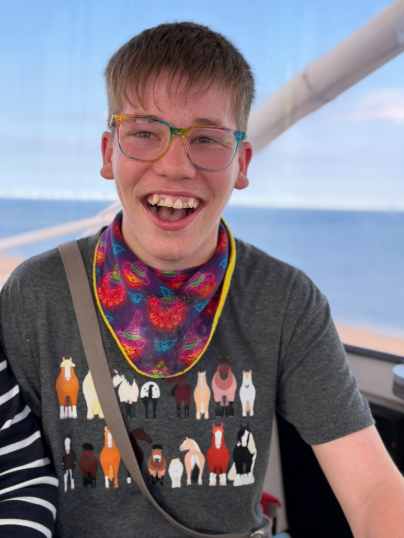
Sebby from United Kingdom
From limited mobility to climbing
For years, Sebby experienced episodes of extreme fatigue, weakness, and developmental delays that no one could explain. Genetic research finally ended his family’s six-year search for answers with a TANGO2 diagnosis. Today, that knowledge helps his family and medical team better understand his needs while he builds independence and enjoys swimming, horse riding, farming, and school. Continued research offers hope for more effective care—and a healthier future for Sebby and every child with TANGO2.
Hear Sebby’s mom, Amanda, share how Sebby’s health and daily life have changed since their family joined the TANGO2 Natural History Study.
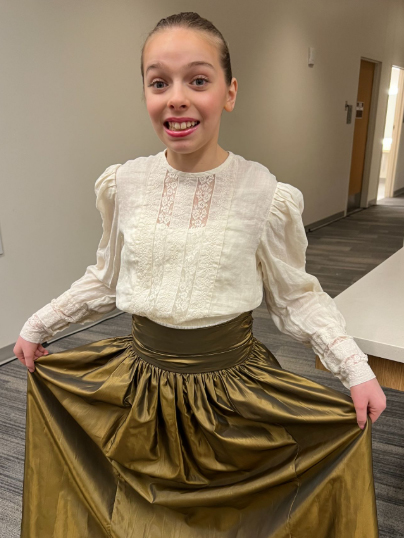
Ellie Moore from Texas, USA
Surviving, recovering, and thriving
Ellie spent years facing unexplained developmental delays, frightening episodes, and a severe metabolic crisis that kept her hospitalized for 58 days. Genetic research finally gave her family a TANGO2 diagnosis—and with it, access to a community, vital knowledge, and greater hope for her future. Today, research is helping families like Ellie’s better understand the condition, prepare for medical challenges, and pursue care that helps children live safer, fuller lives.
Hear Ellie’s mom, Laura, share why taking part in the TANGO2 Natural History Study—and donating to support it—matters for Ellie’s future.
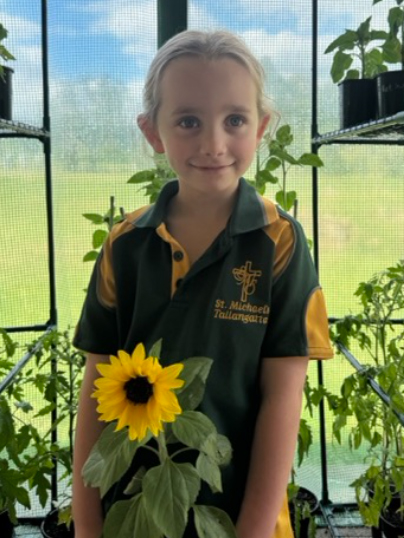
Annie from Australia
A Future Once Unimaginable
Annie, whose journey with TANGO2 has brought uncertainty, hard-fought battles, and extraordinary joy. Today, Annie attends mainstream school with support, rides a bike with training wheels, dances ballet, and loves being a big sister—a life, her mom, Sarah once struggled to imagine. Her family credits research-informed knowledge with helping guide Annie’s care and supporting her progress. For them, every milestone is a source of gratitude and a reminder of what continued research can mean for families living with TANGO2.
Hear Annie’s mom, Sarah, share her message for anyone wondering whether their donation can make a difference.
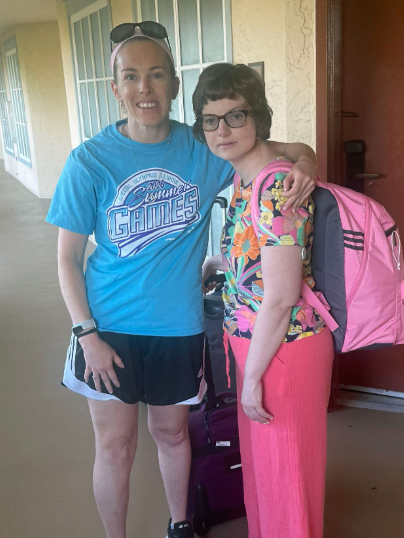
Haley & Caroline from Geneva, IL USA
Answers After Decades
Haley (Hayes) has enjoyed many years participating in Special Olympics, especially swimming and volleyball, where she brings her best effort and great sportsmanship.
Diagnosed with TANGO2 deficiency disorder at age 33, Haley and her family are now finding answers while learning what her diagnosis means for the future. They hope continued research will unlock more pieces of the TANGO2 puzzle and lead to better care and quality of life for every TANGO2 Warrior.
Caroline (Liney) is a natural nurturer who loves caring for her baby dolls and participating in local day programs and social activities.
Diagnosed with TANGO2 deficiency disorder at age 31, her family can now look back at a serious medical episode in high school with new understanding. Liney’s story shows why greater awareness, earlier diagnosis, and continued research are so important for people living with TANGO2.
Hear Haley and Caroline’s dad, Doug, reflect on how he sees his daughters’ future since their family joined the TANGO2 Natural History Study.
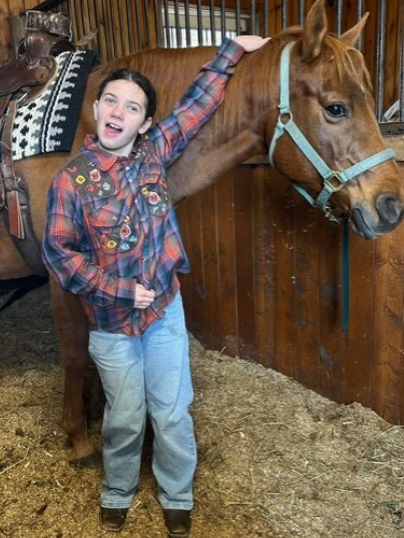
Bria from Nova Scotia, Canada
Inspiring hope through research
Bria experienced her first metabolic crisis at just four months old, beginning a journey that included long hospital stays and time on life support. Today, despite ongoing speech and mobility challenges, she loves horseback riding, playing with friends, and making others laugh. Her determination inspires her family to participate in TANGO2 research, helping turn their experiences into knowledge. Continued research offers hope for better care and a brighter future for Bria and every child with TANGO2.
Hear Bria’s mom, Kara, share what she learned from the TANGO2 Natural History Study that made a difference for her family—and how it shaped her outlook on Bria’s future.
Six Major Findings from the TANGO2 Natural History Study
For families living with TANGO2 Deficiency Disorder, research means more than scientific progress. It means answers to unanswered questions, better care, and hope for a healthier future.
A Global Picture For Families
By bringing together 73 patients from 57 families across 17 countries, the study created the clearest picture yet of TDD. Continued participation and support will help researchers understand the condition across an even broader group of patients and unlock the next discovery.
Children Can Be Diagnosed Earlier
Researchers found that movement, balance, speech, and developmental differences often emerge between one and three years of age. Understanding these early signs help families reach a diagnosis and begin appropriate care sooner.
Crises Can Be Prevented
Among 71 patients with confirmed histories, 46 experienced 115 metabolic crises, with the first crisis occurring at a median age of three. These findings are helping researchers identify when children are most vulnerable and allow them to develop strategies to present medical emergencies
Research Can Protect The Heart
The study documented cardiac crises in 29 patients, including dangerous arrhythmias, cardiomyopathy, and cardiac arrest. Supporting this research means helping scientists find better ways to protect children from TDD’s most life-threatening complications.
A Treatment Discovery
Researchers recorded 92 crises during 602 patient-years without B-complex treatment—and zero during 44 patient-years with it. These extraordinary finding shows how family participation and research funding uncovers treatments that change lives.
Earlier Treatment Offers Hope
Research found that children who began B-complex treatment early had much milder symptoms than older siblings with the same TANGO2 variants. Another study found that 57% of treated participants reported complete resolution of movement disorders or episodic weakness—powerful evidence of what continued research could make possible for more children.
These figures are supported by the 73-patient Natural History Study, the sibling-pair study, research on vitamin B5 in TDD models, and the study of folate in patient-derived cardiac cells. GeneReviews now identifies daily supplementation containing all eight B vitamins as targeted therapy for TDD.
The Next Discover Needs You.
Gifts to the TANGO2 Innovation Fund can help:
- Enroll and follow more individuals with TANGO2 deficiency disorder
- Collect medical histories, clinical records, and family observations
- Track crises, symptoms, interventions, and outcomes over time
- Maintain the international patient registry
- Expand the blood and tissue biorepository
- Analyze data and identify meaningful patterns
- Share findings with families, physicians, and researchers
- Prepare the TANGO2 community for future clinical trials
Every participant adds an essential piece to the picture. Every year of follow-up makes that picture clearer.
Every gift helps move us closer to better treatments, better care and, ultimately, a cure.
What will the next discovery be? Help us find out.
Double Your Impact. Move Research Forward.
We are excited to announce that the Canadian TANGO2 Rare Disease Foundation has committed a matching gift of $15,000 CAD (approximately $10,550 USD) to support the TANGO2 Innovation Fund campaign!
That means every dollar you donate will be matched, dollar for dollar, up to $10,550 USD—doubling your impact on TANGO2 research.
Together, we can turn this generous commitment into more discoveries, better care, and greater hope for families living with TANGO2 Deficiency Disorder around the world.